Zacharias im Tempel: Art Attribution, Value, and Hidden Histories
The biblical narrative of Zacharias in the Temple, where the elderly priest is visited by the Angel Gabriel who foretells the birth of John the Baptist, has captivated artists for centuries. This moment of divine revelation and human doubt offers rich ground for visual interpretation, leading to diverse and compelling artworks across different eras. From the intricate symbolism of the late Gothic period to the dramatic realism of the Baroque, each
Zacharias im Tempel Bild tells a unique story, not only of faith but also of art historical intrigue, evolving attributions, and astonishing shifts in market value.
A Scene of Divine Revelation and Human Doubt
The story, found in the Gospel of Luke, recounts Zacharias's priestly duties in the Temple of Jerusalem when Gabriel appears, announcing that his barren wife, Elizabeth, will bear a son who will prepare the way for the Lord. Zacharias, doubting due to his and Elizabeth's advanced age, is struck mute until the child's birth. This potent combination of the miraculous, the human reaction of disbelief, and the sacred setting provides artists with a powerful tableau. Depicting the ethereal angel, the startled priest, the grandeur of the Temple, and often the curious onlookers, allows for a multifaceted exploration of human experience at the threshold of the divine.
Unveiling Hidden Histories: The Ulm Gothic Panel
Our journey into the world of "Zacharias im Tempel" begins with a fascinating glimpse into the German late Gothic period, specifically an artwork now housed in the Staatsgalerie. This remarkable panel, once a component of a larger, now lost altarpiece dedicated to John the Baptist, presents a rich tapestry of historical and artistic puzzles. The "Zacharias im Tempel Bild" from Ulm is a testament to the intricate craftsmanship and narrative ambition of its time.
An Altarpiece Fragment Rediscovered
What survives today is a compelling fragment, providing clues to a grander religious commission. The very fact that it was part of a dismantled altarpiece points to the changing tastes, iconoclasm, or simply the ravages of time that often scatter artistic ensembles. Imagine the complete altarpiece, with this panel perhaps flanking a central depiction of John the Baptist, lending context and depth to the saint's life story. Even more intriguing is the discovery on its severely damaged reverse side: faint remnants of a depiction of John the Baptist in prison. This "hidden history" adds a profound layer to the artwork, linking the annunciated birth of Zacharias's son directly to his ultimate fate as a prophet. It’s a powerful reminder that many older artworks hold multiple narratives, sometimes literally inscribed on both sides, waiting to be rediscovered and interpreted.
Architectural Grandeur and Narrative Detail
The composition of this particular
Zacharias im Tempel Bild is strikingly symmetrical, dominated by a magnificent Gothic temple architecture. A prominent central pillar, adorned with a figure of Moses, stands in the foreground, effectively dividing the scene and drawing the viewer's eye. To the right, within the sacred confines of the temple, Zacharias kneels before the altar, his posture conveying humility and awe as the Angel Gabriel appears above him, delivering the momentous news. The left side of the panel offers a contrasting scene: a group of men and women, positioned outside the architectural space, observe the divine event. They stand against a richly ornamented gold background, their expressions likely mirroring the disbelief and wonder that Zacharias himself experiences. This dual perspective – the intimate, sacred interaction within and the human observation from without – enriches the narrative, drawing the viewer into both the spiritual and communal aspects of the story.
The Shifting Sands of Attribution: Hans Schüchlin's Legacy
The attribution of artworks from this period can be a complex dance of connoisseurship and scholarly detective work. When this particular
Zacharias im Tempel Bild was acquired in 1859 from the Abel collection, it was initially attributed to Hans Schüchlin, a prominent late Gothic artist from Ulm, or at least his immediate circle. Schüchlin was a master known for his distinctive style and influence in the Ulm region. However, subsequent research and evolving art historical understanding have refined this view. While the work is undoubtedly rooted in the artistic environment of Ulm, it is now often considered to have emerged in the stylistic wake of both the Sterzinger Meister and Hans Schüchlin, suggesting a close follower or a highly skilled artist working within their established traditions. This evolution in attribution underscores the dynamic nature of art history, where new insights continually reshape our understanding of an artist's oeuvre and broader artistic movements.
The Rembrandt Revelation: A Masterpiece Reclaimed
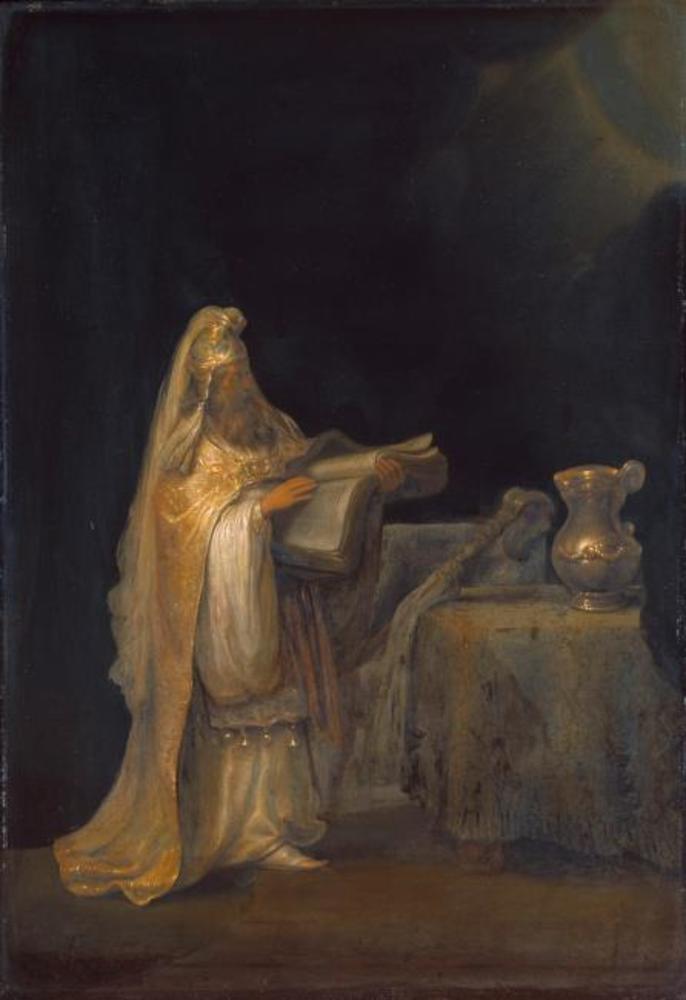
Fast forward centuries and cross continents to the Netherlands, where another compelling story of a "Zacharias im Tempel Bild" recently unfolded, this time involving one of the greatest masters of the Dutch Golden Age: Rembrandt van Rijn. The re-attribution of "The Vision of Zacharias in the Temple" (1633) by researchers at the Rijksmuseum in Amsterdam is a monumental event in the art world, dramatically altering our perception of a painting once overlooked. Readers interested in the specifics of this transformation might also enjoy
Rembrandt's Zacharias: From Workshop to Valued Masterpiece.
From Workshop Doubt to Unquestionable Genius
For decades, this particular
Zacharias im Tempel Bild was relegated to the category of a "workshop piece" – an artwork believed to have originated from Rembrandt's studio but not necessarily painted by the master's own hand. Such attributions significantly impact a work's standing, both critically and financially. Museum Director Taco Dibbits noted that the painting had "disappeared from the radar." The turning point came when the painting's private owners discovered what appeared to be Rembrandt's signature and subsequently approached the Rijksmuseum for an expert examination in 2023.
The Science of Authentication: Modern Techniques in Action
The subsequent two-year investigation was a testament to the rigorous, multi-disciplinary approach of modern art authentication. Art historians, conservators, and scientists meticulously analyzed the painting in the museum's state-of-the-art ateliers. Using cutting-edge techniques such as X-radiography, infrared reflectography, pigment analysis, and comparative studies with undisputed Rembrandt works, they delved deep into the painting's layers. This scientific scrutiny, combined with expert connoisseurship studying brushwork, light, and composition, led to an unequivocal conclusion: "It is undoubtedly a genuine Rembrandt," declared Dibbits. This process highlights how far art scholarship has come, moving beyond mere visual comparison to a scientific understanding of an artwork's creation.
The Astonishing Impact on Value and Legacy
The re-attribution to Rembrandt has had an immediate and profound impact. Works from Rembrandt's workshop are valuable, but genuine Rembrandt masterpieces command astronomical prices. The value of this "Zacharias im Tempel Bild" has multiplied many times over, transforming it from a noteworthy piece into a world-class treasure. For the Rijksmuseum, which already boasts the largest collection of Rembrandt's works, including the iconic "The Night Watch," this painting, on permanent loan from its private owners, further solidifies their position as a premier center for Rembrandt scholarship and display. The market for Rembrandt's works is incredibly strong; a drawing recently fetched €12.7 million, and a painting sold for €175 million three years prior, underscoring the immense value now associated with this rediscovered masterpiece.
Rembrandt's Signature Storytelling
Rembrandt's interpretation of Zacharias's vision is quintessential to his style. The painting masterfully captures the dramatic moment, focusing on the surprised expression of Zacharias, whose face beautifully conveys his disbelief. The artist's renowned use of light and shadow, chiaroscuro, would undoubtedly highlight the priest's emotional turmoil and the ethereal presence of the angel. Rembrandt meticulously depicts the rich, gold-ornamented vestments of the high priest, showcasing his unparalleled skill in rendering texture and detail. As Dibbits aptly put it, it is "a beautiful example of the unique way Rembrandt tells stories," drawing the viewer deep into the psychological and spiritual dimensions of the biblical narrative. For a deeper dive into the contrasting artistic approaches to this theme, explore
Gothic Ulm to Rembrandt: Two Artistic Visions of Zacharias.
Art Attribution: A Blend of Art, Science, and Intrigue
The stories of these two "Zacharias im Tempel Bild" works – the Ulm panel and Rembrandt's vision – powerfully illustrate the complexities and importance of art attribution. It's a field where connoisseurship, historical research, and advanced scientific analysis converge to unlock the secrets held within painted canvases and carved panels.
Why Attribution Matters: Beyond the Price Tag
While the monetary value of a genuine Rembrandt versus a workshop piece is staggering, attribution goes far beyond mere price. It fundamentally shapes our understanding of art history, artistic development, and an artist's individual genius. Correct attribution helps to:
- Build an Artist's Oeuvre: Accurately defines the body of work attributed to a single artist.
- Trace Stylistic Evolution: Allows scholars to map the development of an artist's style and techniques over their career.
- Understand Influence: Helps identify master-apprentice relationships, regional schools, and artistic influences.
- Preserve Cultural Heritage: Ensures that significant works are correctly identified and preserved for future generations.
- Establish Provenance: The documented history of ownership provides crucial context and helps prevent art fraud.
Tips for Aspiring Art Collectors and Enthusiasts
For those fascinated by art and potentially looking to collect, understanding attribution is key:
- Research Provenance: Always inquire about the artwork's history of ownership. A well-documented provenance adds significant value and credibility.
- Study the Artist: Familiarize yourself with the recognized works, stylistic periods, and signature characteristics of artists you admire.
- Consult Experts: For significant purchases, always seek opinions from reputable art historians, conservators, and auction house specialists. Independent authentication is paramount.
- Understand the Science: Be aware that modern authentication often involves scientific analysis (e.g., pigment analysis, X-rays). Ask about what tests have been conducted.
- Recognize Nuance: Attribution can be complex, with categories like "attributed to," "circle of," "workshop of," and "follower of." Each carries different implications for authorship and value.
- Stay Curious: Art history is constantly evolving. New discoveries, like the Rembrandt re-attribution, remind us that accepted truths can always be revisited.
The two "Zacharias im Tempel Bild" narratives, separated by centuries and artistic styles, offer compelling insights into the dynamic world of art. From the Gothic altarpiece fragment in Ulm, revealing hidden depictions and shifting attributions, to the dramatic re-discovery of a genuine Rembrandt in Amsterdam, these stories underscore the enduring power of art to tell stories – not just those depicted on the canvas, but also those woven into their own fascinating histories. Each brushstroke, each repair, each re-evaluation adds another layer to our understanding, inviting us to look closer, question more deeply, and appreciate the profound journey of these remarkable works through time.