Rembrandt's Zacharias: From Workshop to Valued Masterpiece – A Deep Dive into a Rediscovered Gem
The world of art history is a dynamic tapestry, constantly being re-woven with new discoveries and re-attributions. Few stories captivate the imagination quite like the rediscovery of a long-lost or misattributed masterpiece by a legendary artist. This is precisely the narrative that unfolds around a particular zacharias im tempel bild (Zacharias in the Temple painting) – an exquisite work recently and definitively ascribed to none other than the Dutch master Rembrandt van Rijn.
For decades, this compelling depiction of the biblical High Priest Zacharias receiving the divine prophecy of his son John the Baptist's birth lay in relative obscurity, often dismissed as merely a product of Rembrandt's prolific workshop. Yet, through rigorous scientific examination and meticulous art historical analysis, the canvas has reclaimed its rightful place, skyrocketing its value and cementing its significance in the master's oeuvre. This journey from the shadows of a workshop to the limelight of a revered masterpiece offers a fascinating glimpse into the detective work of art connoisseurs and the enduring power of storytelling through paint.
The Triumphant Re-attribution: Rembrandt's "Vision of Zacharias" (1633)
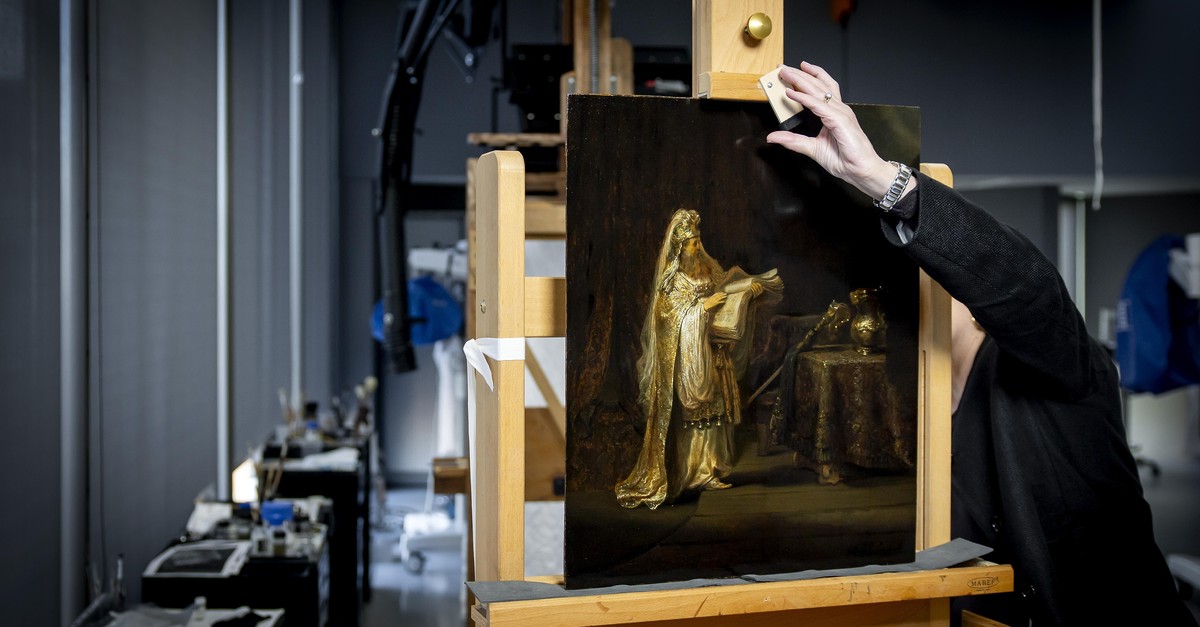
The year 2023 marked a pivotal moment for art enthusiasts and scholars alike when the Rijksmuseum in Amsterdam officially announced the conclusive attribution of "The Vision of Zacharias in the Temple" (1633) to Rembrandt van Rijn. This wasn't merely a hunch; it was the culmination of a two-year intensive investigation, employing the most advanced techniques available in art conservation and research.
For decades, the painting was viewed with skepticism, often relegated to the category of "Rembrandt workshop" or even dismissed altogether. As Rijksmuseum director Taco Dibbits noted, "it had essentially disappeared from the radar." The turning point came in 2023 when the private owners, having discovered a faint signature, approached the museum for a thorough examination. What followed was an exemplary display of modern art historical sleuthing:
- Advanced Scientific Analysis: Experts at the Rijksmuseum's ateliers utilized state-of-the-art technologies. While the reference context doesn't detail specific methods, such investigations typically involve:
- Infrared Reflectography: To reveal underdrawings and changes made by the artist.
- X-ray Imaging: To expose underlying layers of paint and brushwork.
- Pigment Analysis: To identify the exact materials used and compare them to Rembrandt's known palette.
- Dendrochronology: If painted on wood, to date the panel.
- Comparative Analysis: The painting's style, brushwork, composition, and emotional depth were meticulously compared with undisputed works by Rembrandt from the same period. This allowed researchers to identify characteristic touches unique to the master's hand.
- Signature Verification: While signatures can be forged, advanced forensic analysis can often determine their authenticity and whether they were applied by the original artist.
"It is undoubtedly a genuine Rembrandt," declared Dibbits, a statement that reverberated throughout the art world. This re-attribution has not only enriched Rembrandt's known body of work but has also dramatically increased the painting's market value, transforming it from a mere historical curiosity into a priceless treasure. Works by Rembrandt consistently fetch staggering prices; a drawing recently sold for 12.7 million Euros, and a painting acquired by the Amsterdam Museum three years prior commanded 175 million Euros. The "zacharias im tempel bild" now stands firmly in this elite company.
Despite being in private hands, the owners have generously placed the artwork on permanent loan to the Rijksmuseum, ensuring public access to this newly authenticated masterpiece. It now graces the halls of a museum already home to the largest collection of Rembrandt's works, including the iconic "The Night Watch."
Unveiling the Narrative: Rembrandt's Unique Storytelling
Rembrandt's genius lay not just in his technical prowess but in his unparalleled ability to capture the human condition, emotion, and dramatic narrative. His "Vision of Zacharias in the Temple" is a shining example of this skill. The painting vividly portrays the biblical account from the Gospel of Luke, where the High Priest Zacharias, serving in the Temple, is visited by the Angel Gabriel. The angel announces that Zacharias's barren wife, Elizabeth, will bear a son who will be named John – a child destined to prepare the way for the Messiah.
Rembrandt's interpretation is masterfully executed:
- Emotional Impact: The artist brilliantly conveys Zacharias's initial shock and incredulity. His surprised facial expression is central to the composition, drawing the viewer into the profound moment of divine revelation.
- Rich Detail and Symbolism: The priest's richly decorated garments, adorned with golden ornaments, are rendered with exquisite detail, reflecting Rembrandt's fascination with texture and light. These vestments not only signify Zacharias's high status but also hint at the sacredness of the temple setting.
- Dramatic Lighting: Characteristic of Rembrandt, the interplay of light and shadow (chiaroscuro) enhances the drama, highlighting Zacharias and the ethereal presence of Gabriel, creating an intimate and powerful scene.
As Director Dibbits aptly puts it, "It is a beautiful example of the unique way Rembrandt portrays stories." The painting invites contemplation on faith, doubt, and the miraculous, encapsulating a timeless human experience within a biblical context. It's a testament to how a single zacharias im tempel bild can transcend its subject matter to speak to universal themes.
Echoes from the Past: A Gothic "Zacharias in the Temple"
While Rembrandt's Baroque masterpiece captures contemporary attention, the story of "Zacharias in the Temple" has resonated with artists across centuries and artistic movements. Long before Rembrandt, the subject found its expression in the vibrant altarpieces of the late Gothic period. The Staatsgalerie in Germany houses a remarkable late Gothic panel depicting the same scene, offering a stark yet equally compelling contrast to Rembrandt's vision.
This older zacharias im tempel bild, once part of a now-lost altarpiece dedicated to John the Baptist, bears the distinctive hallmarks of the Ulm late Gothic style. Its historical journey is also one of attribution, initially ascribed to Hans Schüchlin or his circle around its acquisition in 1859 from the Abel collection. Scholars now firmly place it within the Ulm milieu, likely stemming from the tradition of the Sterzinger Meister and Hans Schüchlin.
Key features of this Gothic rendition include:
- Symmetrical Composition: A strong, almost architectural symmetry defines the layout, a common trait in Gothic art, providing a sense of order and formality.
- Gothic Temple Architecture: The scene is framed by a distinctive Gothic temple, whose central pillar, adorned with a pillar figure of Moses, meticulously divides the action, guiding the viewer's eye.
- Narrative Division: Zacharias kneels reverently before the altar within the temple's confines, where the Angel Gabriel delivers his momentous announcement. To the left, outside the immediate architecture, a group of men and women, positioned against an ornate gold background, observes the unfolding miracle. This layered storytelling creates a sense of both intimacy and public witness.
- Hidden History: Intriguingly, the reverse side of the panel reveals faint remnants of another scene – John the Baptist in prison – hinting at the broader narrative scope of the original altarpiece and its tragic conclusion for John.
Comparing these two Gothic Ulm to Rembrandt: Two Artistic Visions of Zacharias highlights the evolution of artistic styles, from the symbolic and architectural formality of the Gothic to the dramatic naturalism and psychological depth of the Baroque. Both, however, serve as powerful testaments to the enduring appeal of biblical narratives in art.
The Art of Attribution: Value, Expertise, and Uncovering Hidden Histories
The saga of Rembrandt's "Vision of Zacharias" underscores the critical importance of art attribution. It's not merely an academic exercise; it profoundly impacts a work's cultural significance, its place in art history, and its monetary value. The distinction between a "workshop piece" and an authentic masterwork can mean the difference between millions of Euros.
The rigorous process of re-attribution involves a multidisciplinary approach, blending connoisseurship with scientific analysis. It requires deep knowledge of an artist's style, techniques, materials, and historical context. When new evidence emerges, or when technology allows for deeper insights, the art world re-evaluates. This constant re-evaluation is what keeps art history alive and relevant.
For collectors, museums, and enthusiasts, understanding attribution is key to appreciating the authenticity and provenance of an artwork. It also highlights the painstaking work of art historians and conservators who painstakingly piece together the puzzles of the past, ensuring that artistic legacies are correctly honored and understood. The journey of any significant zacharias im tempel bild, be it ancient or newly authenticated, reflects a larger narrative about how we engage with and value our shared cultural heritage. Explore more about this fascinating process in Zacharias im Tempel: Art Attribution, Value, and Hidden Histories.
Conclusion
The re-attribution of Rembrandt's "Vision of Zacharias in the Temple" is a thrilling reminder that the art world holds endless possibilities for discovery. This painting's journey from workshop anonymity to acknowledged masterpiece enriches our understanding of one of history's greatest artists and highlights the crucial role of modern scholarship and technology. When viewed alongside its Gothic predecessor, the two Gothic Ulm to Rembrandt: Two Artistic Visions of Zacharias pieces serve as powerful examples of how artists across different eras have interpreted the same profound biblical story, each imbuing the zacharias im tempel bild with their unique artistic vision and emotional resonance. These works not only document a religious narrative but also illustrate the evolving human spirit and artistic genius across centuries.